Chikkamagaluru, nestled in the heart of the Western Ghats in Karnataka, is a treasure trove of natural wonders, cultural landmarks, and adventure opportunities. Whether you are a nature enthusiast, a history buff, an adventure seeker, or someone looking for peace and tranquillity, the attractions of Chikkamagaluru offer something unique and unforgettable for every kind of traveler. In this comprehensive guide, we take you through the most iconic and offbeat attractions that you must explore during your visit to the coffee land of Karnataka.
Mullayanagiri — The Highest Peak in Karnataka
Mullayanagiri stands tall at an elevation of 1,930 metres (6,330 feet) above sea level, making it the highest peak in the state of Karnataka. Located approximately 20 kilometres from Chikkamagaluru town, this majestic peak is part of the Baba Budangiri range in the Western Ghats. The name Mullayanagiri is derived from "Mullayya," a local deity, and "giri," meaning hill. The summit features a small shrine dedicated to Lord Mullayappaswamy, which adds a spiritual dimension to the trek.
The trek to Mullayanagiri is one of the most popular activities in Chikkamagaluru. The trail begins at a point called "Sarpadari" and winds through grassy slopes, rocky terrain, and shola forest patches. The trek is moderately challenging and takes approximately 2 to 3 hours to reach the summit, depending on your fitness level and pace. Along the way, you will be treated to panoramic views of the surrounding valleys, distant mountain ranges, and, on clear days, even the Arabian Sea shimmering on the horizon.
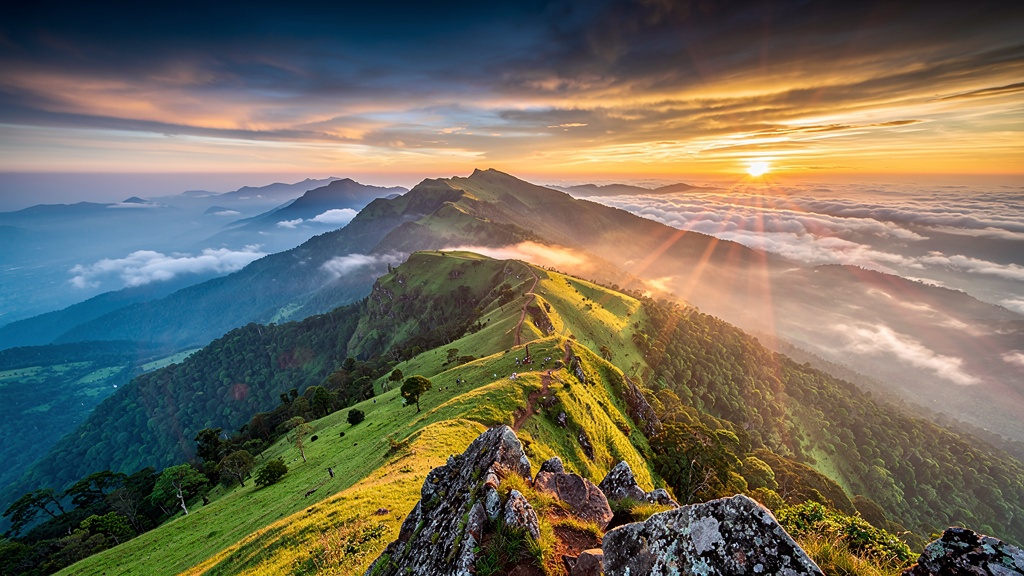
The best time to trek Mullayanagiri is early morning, just before sunrise. Watching the sun rise from the highest point in Karnataka is an ethereal experience — the sky transforms from deep purple to fiery orange and gold as the mist slowly lifts from the valleys below. The summit also houses a small police station, which is believed to be the highest police station in Karnataka. The descent takes about 1.5 to 2 hours. It is advisable to carry sufficient water, wear sturdy walking shoes, and start early to avoid the afternoon heat.
Quick Facts: Elevation — 1,930 m | Distance from Chikkamagaluru — 20 km | Trek Duration — 2–3 hours (one way) | Difficulty — Moderate | Best Time — October to February | Entry — Free
Hebbe Falls — A Cascading Beauty
Hebbe Falls is one of the most breathtaking waterfalls in Karnataka, located about 10 kilometres from the popular hill station of Kemmannugundi, approximately 65 kilometres from Chikkamagaluru town. The waterfall is unique in that it has two distinct tiers — Dodda Hebbe (Big Falls) with a spectacular drop of 168 metres and Chikka Hebbe (Small Falls). The water originates from the hills of Kemmannugundi and cascades down a steep rocky cliff surrounded by dense tropical forest, creating a fine mist that cools the entire area.
Reaching Hebbe Falls is an adventure in itself. Visitors need to drive through coffee plantations and forest roads before parking at a designated point, from where a 30-minute trek through lush greenery and coffee estates leads to the waterfall. The trail is scenic and offers glimpses of local wildlife, including various species of birds, butterflies, and occasionally langurs and macaques. The sound of the waterfall grows louder as you approach, building anticipation for the breathtaking sight that awaits.
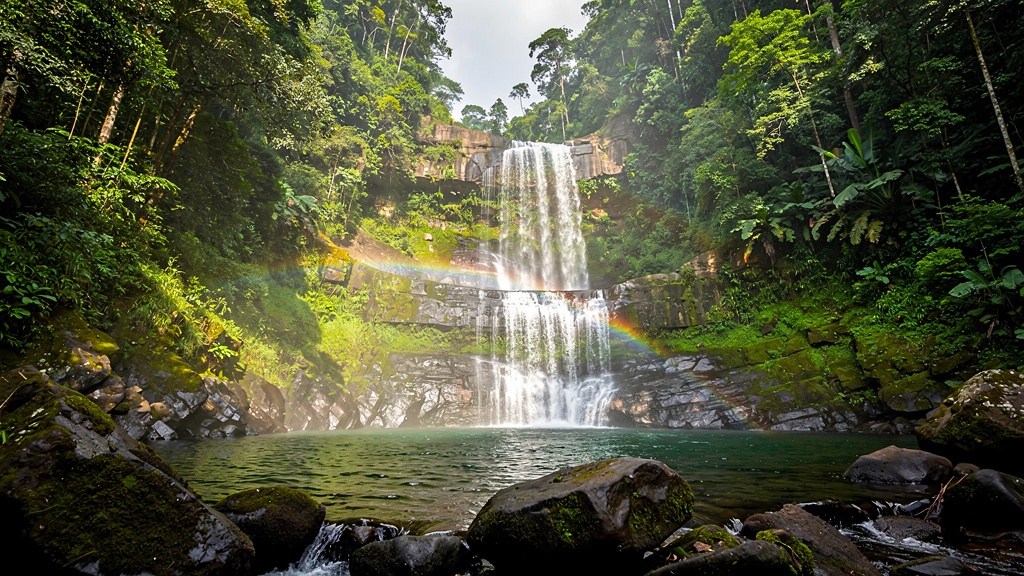
The pool at the base of Hebbe Falls is deep and inviting, and many visitors enjoy a refreshing dip in the cool, crystal-clear waters. However, caution is advised as the currents can be strong, especially during the monsoon season when the waterfall is at its full fury. The best time to visit Hebbe Falls is from July to December, when the waterfall is at its most magnificent. During the peak monsoon months, the sheer volume of water is a sight to behold, though the trek can be slippery. The area around the falls is perfect for photography, picnics, and simply immersing yourself in the beauty of nature.
Quick Facts: Height — 168 m (Dodda Hebbe) | Location — 10 km from Kemmannugundi | Trek Duration — 30 minutes | Difficulty — Easy to Moderate | Best Time — July to December | Entry Fee — Nominal
Baba Budangiri — A Sacred Mountain
Baba Budangiri, also known as Dattatreya Peetha or Chandradronaparva, is a mountain range in the Western Ghats that holds immense religious significance for both Hindus and Muslims. The range is named after the Sufi saint Baba Budan, who is credited with bringing the first coffee seeds to India from Yemen in the 17th century. At the summit, at an elevation of approximately 1,895 metres, lies the cave shrine of Dattatreya, a unique pilgrimage site where Hindu and Muslim devotees come together to offer prayers — a beautiful example of religious harmony that has endured for centuries.
The drive to Baba Budangiri is an experience in itself, with winding roads that cut through coffee plantations, areca nut groves, and dense forests. The views from the top are spectacular, offering a 360-degree panorama of the surrounding hills and valleys. The Manikyadhara Falls, located on the slopes of Baba Budangiri, is a seasonal waterfall that adds to the spiritual and natural beauty of the area. The waterfall is believed to have medicinal properties, and many pilgrims take a dip in its waters as a form of purification.
Quick Facts: Elevation — 1,895 m | Distance from Chikkamagaluru — 30 km | Best Time — October to March | Significance — Hindu-Muslim pilgrimage site | Entry — Free
Kemmannugundi — The Queen of Hills
Kemmannugundi, often referred to as the "Queen of Hills," is a tranquil hill station located about 55 kilometres from Chikkamagaluru town. Situated at an altitude of 1,434 metres, this scenic spot was a favourite summer retreat of the Wodeyar kings of Mysore, and it still retains a regal charm that transports visitors back in time. The Krishnarajendra Circle, with the Kemmannugundi Guest House at its centre, was originally built in the 1930s and was inaugurated by Maharaja Krishnaraja Wodeyar IV.
The area offers several attractions within walking distance, including the Raj Bhavan, the remains of the Zindal Palace, and the lovely Rani Jhari viewpoint. The climate here is pleasantly cool throughout the year, with temperatures rarely exceeding 25°C even in summer. Kemmannugundi is also the starting point for the trek to Hebbe Falls and offers numerous nature trails through forests and plantations. The best time to visit is from September to May, with the monsoon months offering a particularly lush and green landscape.
Quick Facts: Elevation — 1,434 m | Distance from Chikkamagaluru — 55 km | Best Time — September to May | Known For — Heritage, trekking, waterfalls | Entry — Free
Kallathigiri Falls — A Hidden Gem
Kallathigiri Falls, also spelled Kallathagiri Falls, is a beautiful yet relatively less crowded waterfall located near the Kemmannugundi hill station. The waterfall cascades from a height of about 15 metres into a small natural pool, surrounded by lush green vegetation and moss-covered rocks. Unlike the more commercialized waterfalls in the region, Kallathigiri retains a pristine and untouched charm that appeals to travelers seeking solitude and unspoiled natural beauty.
The waterfall is easily accessible by road, with a short walk from the parking area. The pool at the base is safe for swimming during most parts of the year, except during the peak monsoon when the currents can be strong. The area around the waterfall is ideal for a relaxing picnic, and the gentle sound of falling water creates a meditative atmosphere. Kallathigiri Falls is best visited during and immediately after the monsoon season, from July to December, when the water flow is at its strongest.
Quick Facts: Height — 15 m | Location — Near Kemmannugundi | Access — Short walk from road | Best Time — July to December | Entry — Free
Bhadra Wildlife Sanctuary
Located approximately 40 kilometres from Chikkamagaluru town, the Bhadra Wildlife Sanctuary is a protected area that spans over 490 square kilometres of lush tropical forest. The sanctuary is named after the Bhadra River that flows through its heart and is part of the larger Nilgiri Biosphere Reserve. Bhadra is home to an incredible diversity of flora and fauna, including tigers, leopards, Indian elephants, gaurs (Indian bison), sambar deer, spotted deer, wild boars, sloth bears, and over 250 species of birds.
The sanctuary offers jeep safaris that take visitors deep into the forest in search of wildlife. The best times for safaris are early morning and late afternoon when animals are most active. The sanctuary also has several trekking trails for those who prefer to explore on foot. The Bhadra River adds to the scenic beauty of the sanctuary, and the Muthodi area within the sanctuary is famous for birdwatching. The best time to visit Bhadra Wildlife Sanctuary is from October to May, with the park remaining closed during the monsoon season from June to September.
Quick Facts: Area — 490 sq km | Distance from Chikkamagaluru — 40 km | Safari Timings — 6:00 AM & 3:00 PM | Best Time — October to May | Entry Fee — Applicable
Coffee Museum — A Journey Through Time
Located in the heart of Chikkamagaluru town, the Coffee Museum is a must-visit for anyone interested in understanding the rich history and culture of coffee cultivation in the region. Established by the Coffee Board of India, the museum takes visitors on a fascinating journey through the history of coffee in India, from the legendary story of Baba Budan smuggling coffee seeds from Yemen in the 17th century to the modern-day coffee industry that employs millions of people across Karnataka.
The museum features interactive exhibits, vintage coffee-processing equipment, photographs, and displays that explain the entire coffee-making process — from planting and harvesting to roasting, grinding, and brewing. Visitors can also participate in coffee-tasting sessions where they can sample different varieties of Indian coffee. The museum shop offers freshly roasted coffee beans and powder that make for excellent souvenirs. The Coffee Museum is a small but well-curated attraction that can be covered in about an hour.
Quick Facts: Location — Chikkamagaluru town | Timings — 10:00 AM to 5:00 PM (Closed on Mondays) | Entry Fee — Nominal | Duration — 1 hour | Best For — Coffee enthusiasts, history lovers
Manikyadhara Falls
Manikyadhara Falls is a seasonal waterfall located on the slopes of the Baba Budangiri range. The name "Manikyadhara" translates to "a shower of gems" in Kannada, a fitting name for a waterfall that sparkles like precious stones as sunlight filters through the mist and falling water. The waterfall is considered sacred by devotees who visit the Dattatreya Peetha, and many believe that the waters have healing properties.
The waterfall is at its most spectacular during and immediately after the monsoon season, from July to December. During the dry months, the water flow reduces significantly, and the waterfall may even dry up completely. The area around Manikyadhara Falls is covered with lush green vegetation and offers excellent opportunities for photography and picnicking. The falls are located close to the Baba Budangiri shrine, making it convenient to visit both attractions in a single trip.
Quick Facts: Location — Baba Budangiri slopes | Type — Seasonal waterfall | Best Time — July to December | Distance from Chikkamagaluru — 30 km | Entry — Free
Honnamana Kere — The Sacred Lake
Honnamana Kere is a picturesque lake located about 35 kilometres from Chikkamagaluru town, near the village of Sakrepatna. The lake is named after the goddess Honnamma, and it is considered a sacred site by locals. The lake is surrounded by rolling hills, coffee plantations, and lush green fields, creating a serene and tranquil atmosphere that is perfect for relaxation and meditation.
The legend associated with Honnamana Kere tells the story of a devout woman named Honnamma who, according to folklore, was blessed by the gods and the lake was formed as a result of her devotion. A small temple dedicated to the goddess Honnamma is located on the banks of the lake. The best time to visit is during the winter and post-monsoon months when the water level is high and the surrounding landscape is lush and green. Honnamana Kere is a peaceful offbeat destination, ideal for those looking to escape the crowds.
Quick Facts: Location — 35 km from Chikkamagaluru | Significance — Sacred lake with temple | Best Time — October to February | Activities — Photography, relaxation | Entry — Free
Ayyanakere Lake
Ayyanakere Lake is a historic irrigation lake located near Sakrepatna, approximately 35 kilometres from Chikkamagaluru town. Built during the Hoysala dynasty, the lake is an engineering marvel of its time and continues to serve as a vital water source for the surrounding agricultural lands. The lake spans an area of about 4 square kilometres and is surrounded by hills, coffee plantations, and paddy fields.
Ayyanakere is a popular spot for photography, especially during sunrise and sunset when the still waters of the lake mirror the changing colours of the sky. The lake is also a great place for birdwatching, with several species of migratory and resident birds frequenting its waters. Visitors can take a peaceful walk along the bund of the lake, enjoying the cool breeze and the stunning views of the surrounding landscape. The best time to visit is from October to March when the weather is pleasant.
Quick Facts: Location — 35 km from Chikkamagaluru | Area — 4 sq km | Built By — Hoysala dynasty | Best Time — October to March | Activities — Photography, birdwatching
Plan Your Attraction Visits in Chikkamagaluru
With so many incredible attractions spread across the region, planning your itinerary in advance can help you make the most of your time in Chikkamagaluru. Here are a few suggested itineraries based on the duration of your stay:
- 2-Day Trip: Day 1 — Mullayanagiri sunrise trek, coffee estate tour, and Coffee Museum. Day 2 — Hebbe Falls or Kemmannugundi and Baba Budangiri.
- 3-Day Trip: Day 1 — Mullayanagiri and Baba Budangiri. Day 2 — Hebbe Falls and Kemmannugundi. Day 3 — Bhadra Wildlife Sanctuary safari and Honnamana Kere.
- 4-Day Trip: Include all of the above with additional time for relaxation at your homestay, exploring local markets, and visiting offbeat attractions like Ayyanakere Lake and Kallathigiri Falls.
Regardless of how you choose to explore, the attractions of Chikkamagaluru promise to leave you with memories that will last a lifetime. Each destination has its own unique story, its own beauty, and its own way of touching your heart. So take your time, soak it all in, and let the magic of the coffee land work its charm on you.